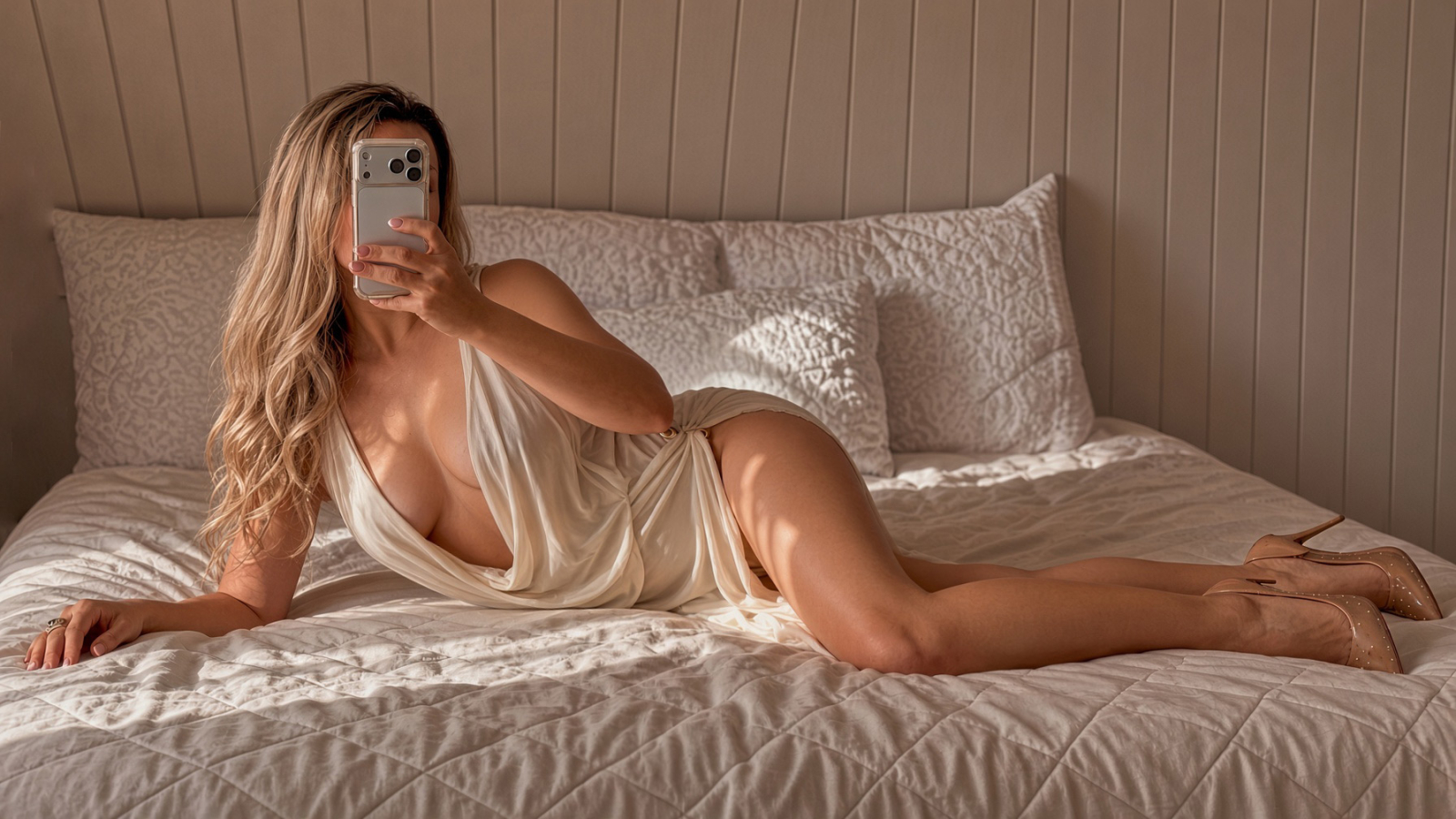
When I call myself a modern day courtesan, I am placing myself in conversation with a long and fascinating history. The world I live in is very different from the courts, salons and private houses of the past, but I recognise a shared ideal, a woman whose presence is shaped by beauty, intelligence, culture, sensuality and the art of companionship.
The courtesan was never simply a beautiful woman. At her most compelling, she was a woman who could hold attention through conversation, wit, education, style and an understanding of human nature. Her world might include poetry, music, theatre, fashion and the exchange of ideas. Beauty could open the door, personality, intelligence and artistry gave the encounter its meaning.
In ancient Greece, hetairai were women described as companions, although their social position and freedom varied. Some were remembered for their music, conversation and wit. The surviving accounts were often written by men, so they tell us about the culture that observed these women as well as about the women themselves. Phryne of Thespiae became one of the best known names associated with the tradition. Later stories linked her to several paintings and the sculptor Praxiteles and his image of Aphrodite, though many details of her life were embellished long after her death.
In Renaissance Venice, Veronica Franco embodied another aspect of the courtesan’s world. She was a poet, a published writer and a participant in the city’s literary circles. In her work, she defended women’s dignity and challenged the double standards imposed upon them. I admire the way she used her own voice and intellect to shape how she would be remembered.
La Paiva, the celebrated courtesan of nineteenth-century Paris, expressed herself through a different kind of artistry. Her name became associated with a luxury and grand residence on the Champs-Élysées, decorated by leading artists and visited by writers and public figures. Her story speaks of ambition, glamour and social influence, while also reminding us that a courtesan’s status could depend on powerful patrons and marriage.
These women lived in different centuries and circumstances. I don’t claim that their lives were easy or that their experiences were the same as mine, but I believe we share an aspiration for independence. By independence, I mean the freedom to think, live and create in my own way and the courage to choose my own path in a world that constantly dictates how things should be done and how we should live.
Their stories were shaped by the limits placed on women in their own times, my story is shaped by the times I have to live through. What connects us all, is the ambition to be more, to cultivate knowledge, make choices, create beauty and leave a distinct impression.
For me, being a modern day courtesan means bringing thought and feeling into my service. I care about the way an experience is composed, the conversation, the setting, the music, the clothes, the mood and the small details that help someone feel truly present. I want companionship to engage the mind as well as the senses and to feel personal rather than routine.
I am an independent woman and I shape my approach according to my own values. I choose to devote each day to one man because I believe genuine attention needs space. The time we share should feel considered, with room for conversation, anticipation and genuine connection. That selectivity is part of my understanding of the courtesan’s art, presence cannot be hurried.
My interests in art, travel, history, performance and sensuality all find a place in this identity. Sometimes I am a companion for an evening, sometimes I create a more theatrical or intimate experience. In each, I bring imagination and care, while remaining a woman with her own boundaries and ambitions.
The modern day courtesan is not a relic from a vanished age. She is a woman who can draw inspiration from the past while defining her own life in the present.
I see myself in this lineage, a woman who values beauty, luxury as much as intelligence, understands the power of desire and the importance of choice and makes companionship an art of her own.